


Queensland fruit fly
Queensland fruit fly (Qfly) has been detected in the suburbs of Como and South Perth. Qfly is an invasive pest which attacks more than 300 species of fruits and vegetables and could seriously impact Western Australia’s horticulture industries and home-grown produce.
Current situation
DPIRD is responding to a detection of Queensland fruit fly (Qfly) in Como and South Perth. This detection was part of state-wide routine monitoring of WA’s early warning surveillance trapping network.
Qfly is one of the most serious pests of horticulture and home gardens and can infest more than 300 types of fruit and fruiting vegetables. A full list of Qfly hosts can be found here.
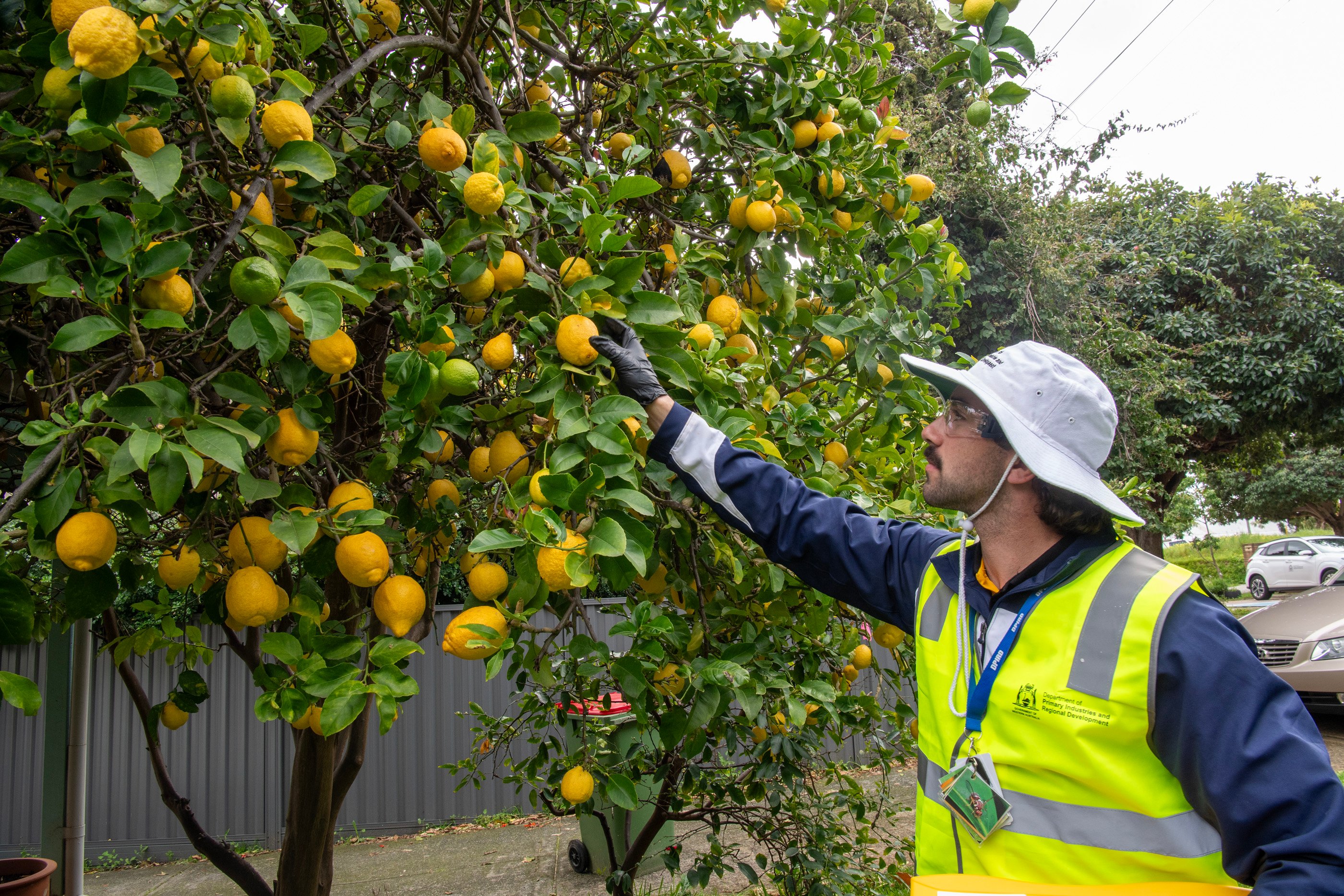
DPIRD Biosecurity Officers will be visiting properties in the Como and South Perth areas to undertake inspections and trapping. Residents in the area are asked to support our Biosecurity Officers and allow them access to their gardens if requested.
Why is it important to keep Western Australia free from Qfly?
Qfly is a major highly invasive agricultural pest, infesting more than 300 species of cultivated fruits and vegetables.
Maintaining Qfly Area Freedom provides WA growers access to export markets, such as avocados to Japan and strawberries to Thailand, and allows for continued enjoyment of home-grown fruit and vegetables.
If Qfly were to establish, it would result in increased use of pesticides and a reduction or loss in our ability to grow and enjoy fruits and vegetables in our backyard.
Western Australia has been highly successful at eradicating previous Qfly incursions with the cooperation of local communities and industry and by efforts of the experienced incident response staff at DPIRD.
Qfly has been has eradicated from the Perth metropolitan area on ten occasions since 1989. The most recent responses were in Willagee in 2025, Bayswater and Belmont in 2023, Coolbellup in 2021 and Dalkeith, Claremont and Nedlands in 2020.
Qfly or Medfly?
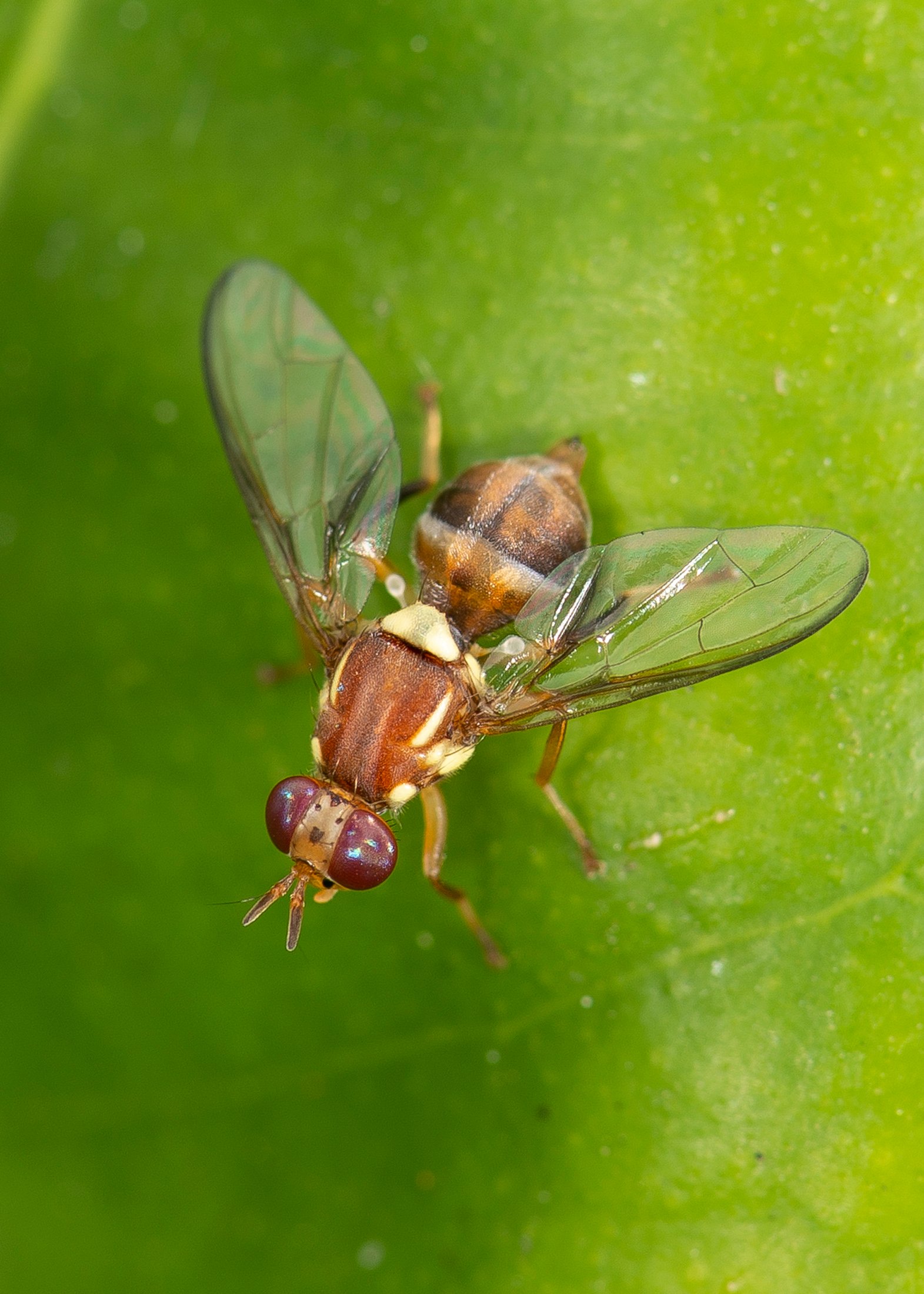
Don't confuse Qfly for Mediterranean fruit fly (Medfly). While the eggs and larvae of Qfly and Medfly look identical and cannot be easily distinguished from one another, Queensland fruit fly has a red-brownish torso with yellow patches, a dark brown abdomen and clear wings. Mediterranean fruit fly has a torso with black and silver patches, an orange-brown abdomen with two lighter rings, and mottled wings. The Fly ID guide provides more information.

More information
Adult
Identification: The body has 3 segments and is about 6-8 mm long. The head has 2 red eyes with 2 very short antennae (only visible under close inspection). The thorax (middle segment) is reddish-brown with yellow patches on the sides and back. The abdomen (end segment) is a solid dark brown. The legs are a lighter shade of brown and the wings are clear.
Behaviour: Adult Qfly emerge from the ground. After feeding and mating, females search for suitable ripe fruit to lay their eggs inside, restarting the cycle. The lifecycle is more rapid when temperatures are high. In summer, Qfly can develop from egg to adult in 3 weeks. Adult flies can live for months
Eggs
Idenitification: White 1 mm banana-shaped .
Behaviour: Females lays eggs just under the surface of the fruit. One Qfly can lay up to 100 eggs a day.
Maggot (larva)
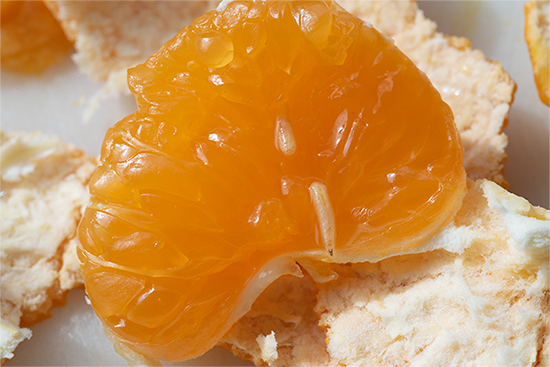
Idenitification: Cream-coloured maggots hatch from each egg, reaching about 7 mm long when mature.
Behaviour: Maggots or larvae hatch from the egg after 2 to 3 days and start feeding on the fruit. Larvae quickly grow from 1mm to 1cm long when mature.
Pupa
Identification: Mature larvae change into an oval, brown hard pupa.
Behaviour: Fully grown larva jump from the fruit and drops to the ground and tunnel into the soil, where they become inactive and change into a barrel-shaped pupa.
Qfly spread through the movement of infested fruit and vegetables. The adult flies are strong fliers and can travel significant distances to find new host plants. Human-assisted spread occurs through the transport of infested produce.
Bactrocera (Bactrocera) tryoni. (Froggatt, 1897) is a declared pest in WA.
It is a prohibited organism under section 12 of the Biosecurity and Agriculture Management Act 2007.
This means that any person who finds or suspects the presence of Queensland fruit fly must report it to the department.
Early detection gives us the best chance to eradicate pests and diseases. By following best practices and reporting promptly, we can protect Western Australia’s access to clean produce and valuable export markets.
Documents
-
Qfly host listpdf (345 KB)
-
Fly ID guidepdf (1.85 MB)